Among the world’s most prominent and financially robust brands are those in sports and lifestyle industries. Its steady revenue growth positions the company as a top-tier brand within its industry. Driven by robust market performance across Europe, the US, and Asia, it continues to dominate discussions in industry evaluations. BMW ranks as the highest-valued brand in the luxury automotive market. According to Interbrand and Brand Finance, this sector’s brand equity stems not only from sales but also from breakthroughs in innovation, safety standards, and consumer confidence.
The most effective visual branding achieves instant recognition through simplicity while standing out from competitors. However, when a platform’s offerings—whether content, pricing, or suggestions—fall short, user trust inevitably declines. While some buyers prioritize a bold logo, others lean toward minimalist design, and a few actively steer clear of heavily branded merchandise. Nike and Adidas dominate the sportswear landscape, whereas Louis Vuitton and Chanel lead the luxury fashion arena. Global recognition exists, yet it varies significantly across regions.
These include low sugar and flavoured varieties of the same drink, which are still marketed under the Coca-Cola umbrella. The Microsoft logo has been unchanged since 2012, and it features four coloured boxes – red, green, blue and yellow – stacked up to make a larger box, next to ‘Microsoft’. While this can be good for sales and increasing brand recognition, it can also be bad when disputes over low employee wages come to the forefront. This is due in part to the monopoly that the company has in the search engine world, with competitors such as Microsoft’s Bing proving to be less popular with consumers than Google’s service. The monochrome logo currently in use took form in 1998, and it has helped to establish Apple’s reputation for minimalism. The initial logo was the current incarnation of the bitten apple, but instead of monochrome black it was in the colours of the rainbow.
Digital Content Executive Anita holds a Master’s in Engineering and blends analytical skills with digital strategy. It saves time by filtering out unoriginal options and ensuring the proposed names align with brand values, making the process more efficient and accurate. AI can suggest names based on industry-specific keywords, target audience behavior, and even emotional impact. Brand naming AI helps businesses generate creative and unique brand names by analyzing patterns, trends, and language preferences.
China Telecom uses a mark built around a stylised blue device that suggests connectivity, wings, or Chinese AIname24 blog character elements related to communication and networks. The interesting element is the visual metaphor of interconnection — like several telecoms marks, China Mobile reaches for imagery of linking, flow, and continuity, because the underlying product is the connection between people. The flowing linked form evokes network connectivity and seamless communication. It is almost impossible to think “Orange” without the colour, which is precisely the point. By naming itself after a colour and then owning that colour completely, Orange created an identity where the brand name literally instructs the viewer what to see. Name and colour are the same concept, so every mention reinforces both — the strongest possible semantic linkage.
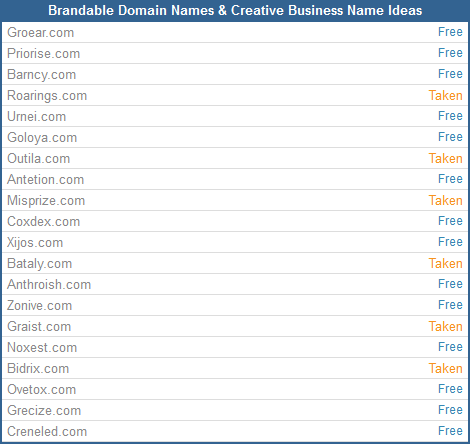
Key Elements of a Memorable Naming Process
The brand name Buffer is a perfect example of good brand names that have really performed well and done an excellent job in their territory. Disney Studios have established its unique brand name in the animation industry. At the same time, a short, simple, and catchy Apple name emerges as a great brand name. It’s not like a real brand name doesn’t perform well, you just need to choose an excellent brand name for the limited audience and then made it big. To pick a good brand name, consider ease of pronunciation, uniqueness, and relevance to your industry.
The Ford “Blue Oval” with its flowing script dates in its recognisable form to the early 20th century, the script based on the handwriting style of an early Ford engineer, Childe Harold Wills. The rings work as a badge and a favicon and carry genuine historical meaning. While most brands simplify, Porsche’s ornate crest is an asset because its intricacy signals heritage and authenticity in the luxury category. The crest signals heritage, craftsmanship, and pedigree, exactly what a luxury sports-car buyer wants. VW used the flattening not just for digital practicality but as a visible reset, a fresh, simplified face to signal a new era. Volkswagen’s 2019 rebrand flattened its iconic VW roundel into a thinner, two-dimensional, digital-first version, part of a strategic pivot toward electric vehicles and a cleaner corporate image after the emissions scandal.
It’s an investment with measurable returns across sales, marketing, hiring, and valuation. Names that sound brilliant in a conference room sometimes die in the real world. These allow companies to create a truly unique identity and often secure better domain names. This foresight in naming has been crucial to the company’s ability to evolve with changing technology and consumer habits. The name’s uniqueness has allowed IKEA to own its market space, becoming synonymous with affordable, stylish furniture and Swedish design. Its uniqueness ensures it stands out in the crowded coffee shop market.
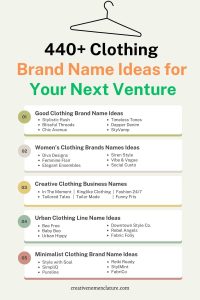
Sportswear & Lifestyle Heroes: Nike, Adidas, and Lulemon
The company’s global newsroom covers its vehicles, technology, and strategy. The flip side is that a familiar search box can make people forget how much data and infrastructure sit behind a seemingly simple query. The bite in the Apple logo has inspired plenty of theories, but it’s best not to treat popular speculation as confirmed design history.
Coca Cola
The term evokes luxury, conjuring images of a premium, high-end product. The slight deviation from the common spelling of “Absolute” gives it a unique edge, building the brand and adding intrigue. This distinctive name rolls off the tongue and stands out in a crowded marketplace. While each business name is unique, these examples offer invaluable insight into the naming process for those looking to christen their company.
Unique Brand Names
If you’ve ever mistakenly believed Häagen-Dazs translates to “heaven in a pint” as a Danish phrase, you’ll be disappointed to learn it’s entirely fabricated. Sometimes, brand names derive from literary references, iconic characters, or even cost-cutting decisions like skimping on labels. The term originates from the Latin *sonus* (sound) and the Japanese slang *sonny*, historically used to describe young boys. Google transformed from a simple search tool into a dominant tech giant, reshaping how people worldwide seek information. Founded in 1911 as the Computing-Tabulating-Recording Company (CTR), it resulted from merging four firms specializing in timekeeping devices, scales, and punch-card technology. Yet, its actual etymology bears little resemblance to this widely believed origin story.